
Innovation Minds University
Engagement ROI
Measuring the Return on Investment (ROI) of employee recognition programs involves both quantitative and qualitative methods. The goal is to compare the costs of your recognition initiatives against the tangible and intangible benefits they generate for your organization.
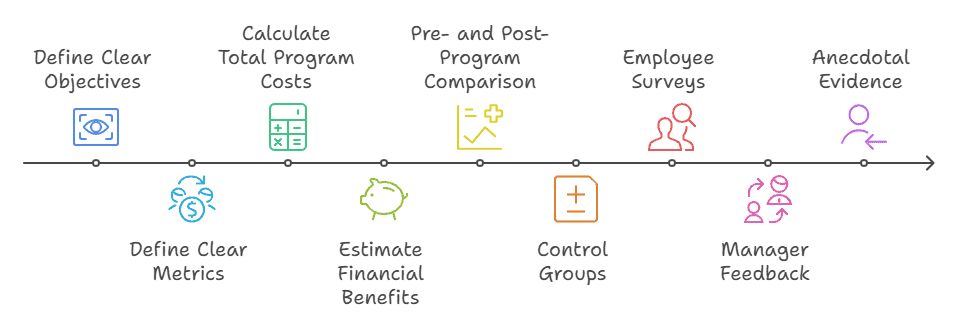
Define clear Objectives: Start by identifying what you want to achieve with your recognition program, such as:
- Reducing turnover
- Increasing employee engagement
- Improving productivity
- Enhancing customer satisfaction
Define clear Metrics to track:
- Turnover/retention rates
- Absenteeism rates
- Employee engagement scores
- Productivity/output measures
- Customer satisfaction/Net Promoter Score (NPS)
- Participation rates in recognition programs
Quantitative Measurement Approaches:
- Cost-Benefit Analysis
- Calculate Total Program Costs – Include software, awards, events, time spent, and administrative costs.
- Estimate Financial Benefits – Quantify savings or gains, such as, reduced turnover costs (cost to hire, onboard, train new employees), increased productivity (output per employee), lower absenteeism (cost of lost workdays), and Improved customer satisfaction (revenue impact)
- Pre- and Post-Program Comparison – Measure key metrics before and after the recognition program launch. Additionally, use historical data.
- Control Groups – If possible, compare groups with and without recognition programs.
Qualitative Measurement Approaches: Gathering feedback from the team is important to understand the impact of recognition program. This could include:
- Employee Surveys: Ask about perceived value, motivation, and satisfaction with recognition.
- Manager Feedback: Gather insights on changes in team morale and performance.
- Anecdotal Evidence: Collect stories and testimonials illustrating positive outcomes.